Agentic AI: The Next Evolution in Autonomous Intelligence
Agentic AI represents a leap beyond traditional and generative AI � enabling systems that can perceive, reason, plan, and act autonomously. This post explores its architecture, frameworks, and future impact for technical readers.
What Is Agentic AI?
Agentic AI refers to AI systems that possess agency � the ability to independently set goals, plan strategies, and execute actions. It builds on large language models (LLMs) but integrates planning engines, memory modules, and environment interaction layers to form complete autonomous agents.
Unlike standard generative models that respond to prompts, agentic systems can handle multi-step workflows such as "find data ? analyse ? execute ? report" without human supervision.
Agentic AI Architecture
The architecture of agentic AI typically involves multiple layers working in concert:
- Perception Layer: Ingests data from text, sensors, or APIs to model the environment.
- Reasoning Engine: Often powered by an LLM or transformer-based model capable of contextual reasoning.
- Planning & Memory Module: Uses long-term memory (vector stores, databases) and dynamic task graphs to plan multi-step operations.
- Action Executor: Interfaces with APIs, robotic systems, or external tools to complete tasks autonomously.
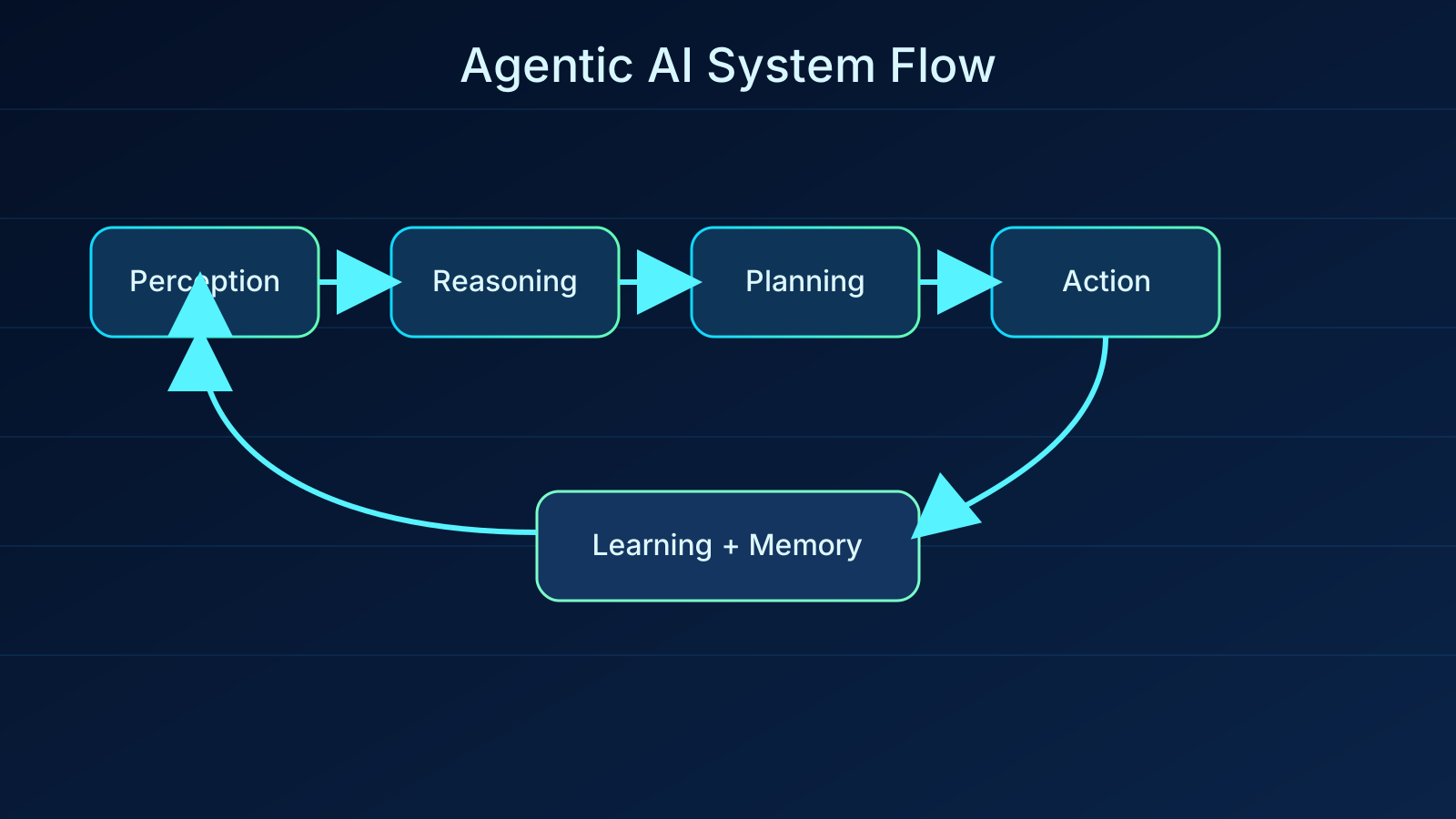
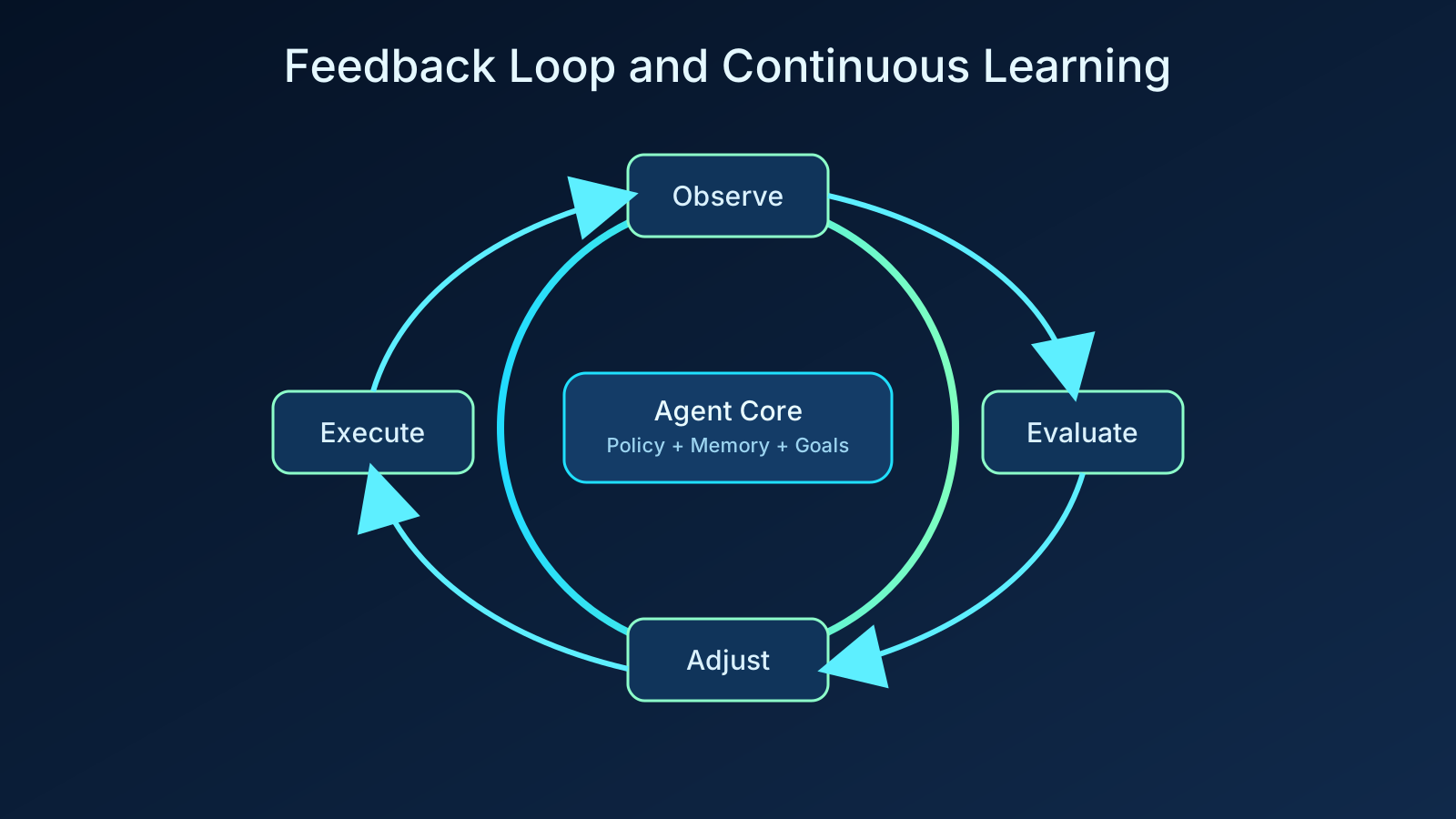
These components operate within an autonomy loop � perceive ? reason ? plan ? act ? learn � enabling self-improving behaviour.
Visual: Agentic AI System Flow
Frameworks and Tools
Several open-source frameworks and enterprise tools are emerging to support agentic architectures:
- LangChain: Provides modular tools to connect LLMs with memory, databases, and APIs for agentic workflows.
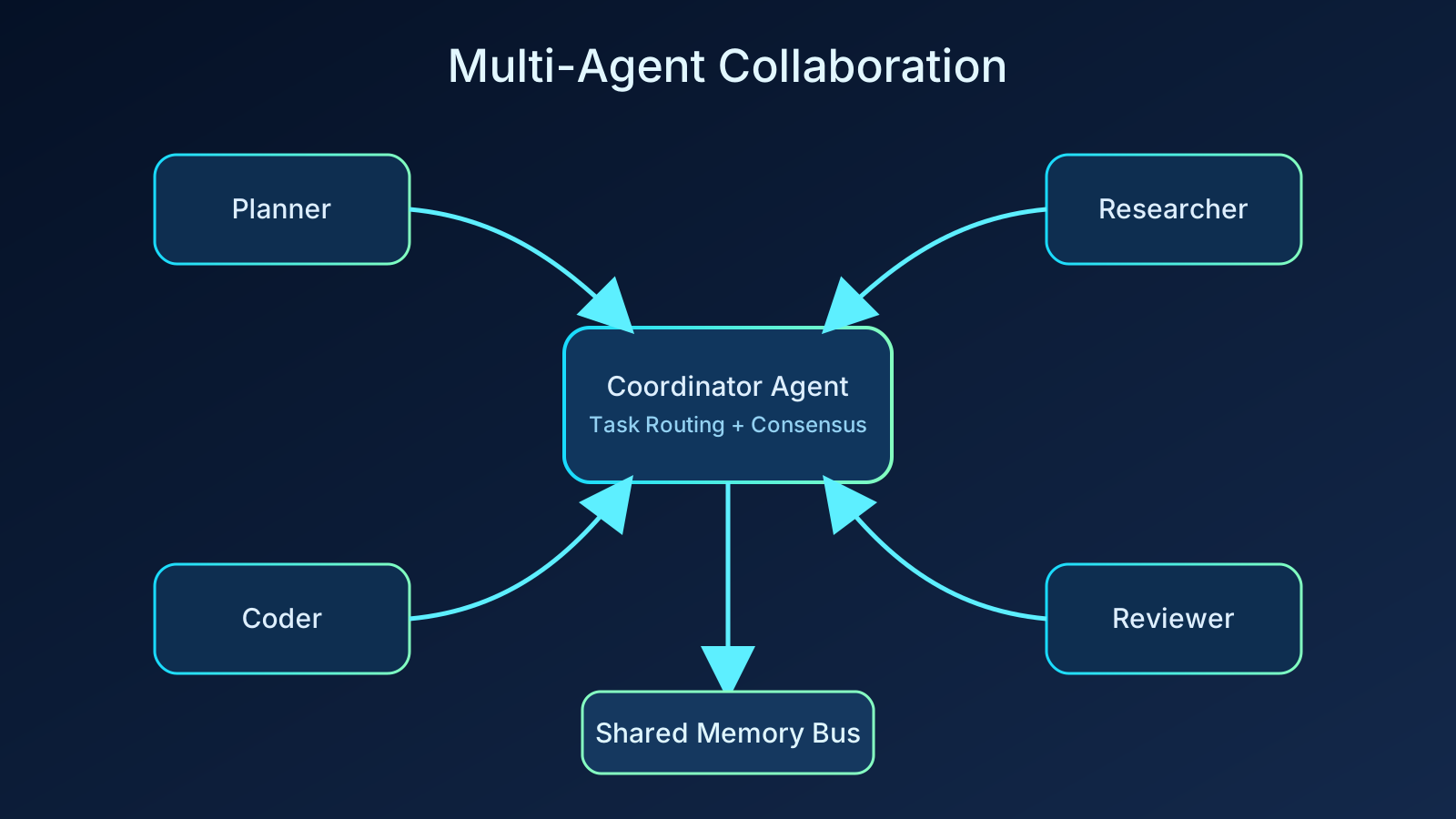
- AutoGen: From Microsoft, enables multi-agent collaboration where LLMs can coordinate to complete complex goals.
- OpenDevin: An open-source agentic framework for automating developer tasks such as debugging and documentation.
- Meta�s Toolformer: A research prototype that allows models to decide when and how to use external tools dynamically.
These frameworks demonstrate how AI agents can be orchestrated to function as adaptive, autonomous systems.
Visual: Multi-Agent Collaboration
Agentic AI vs. Generative AI
The distinction between generative and agentic AI lies in control and goal orientation:
- Generative AI: Produces content based on prompts (e.g., text, image, or code generation).
- Agentic AI: Autonomously executes tasks, coordinating multiple generative and reasoning processes to achieve objectives.
In essence, Generative AI creates, while Agentic AI executes.
Technical Challenges
For developers and researchers, agentic AI introduces several engineering and ethical challenges:
- Memory Management: Designing scalable memory that balances short-term context with long-term retention.
- Goal Alignment: Preventing agents from pursuing suboptimal or unsafe actions due to incomplete objectives.
- Evaluation Metrics: Developing benchmarks for multi-step autonomy rather than single-output accuracy.
- Security: Ensuring sandboxed execution for agents that interact with external systems.
Visual: Feedback Loop and Continuous Learning
Applications in Industry
Agentic AI is being piloted in various technical and operational contexts:
- DevOps: Automated build, test, and deploy cycles using self-correcting agents.
- Healthcare: Agents coordinating between EHR systems, scheduling, and diagnostics.
- Finance: Autonomous investment analysis, portfolio optimisation, and regulatory compliance.
- Robotics: Integration with reinforcement learning for adaptive physical agents.
Future Directions
Next-generation agentic AI research is focused on:
- Improving memory architecture for long-term context retention.
- Introducing multi-agent communication protocols for collaborative autonomy.
- Embedding ethical reasoning to align decisions with human values.
- Optimising resource efficiency through reinforcement-based self-tuning.
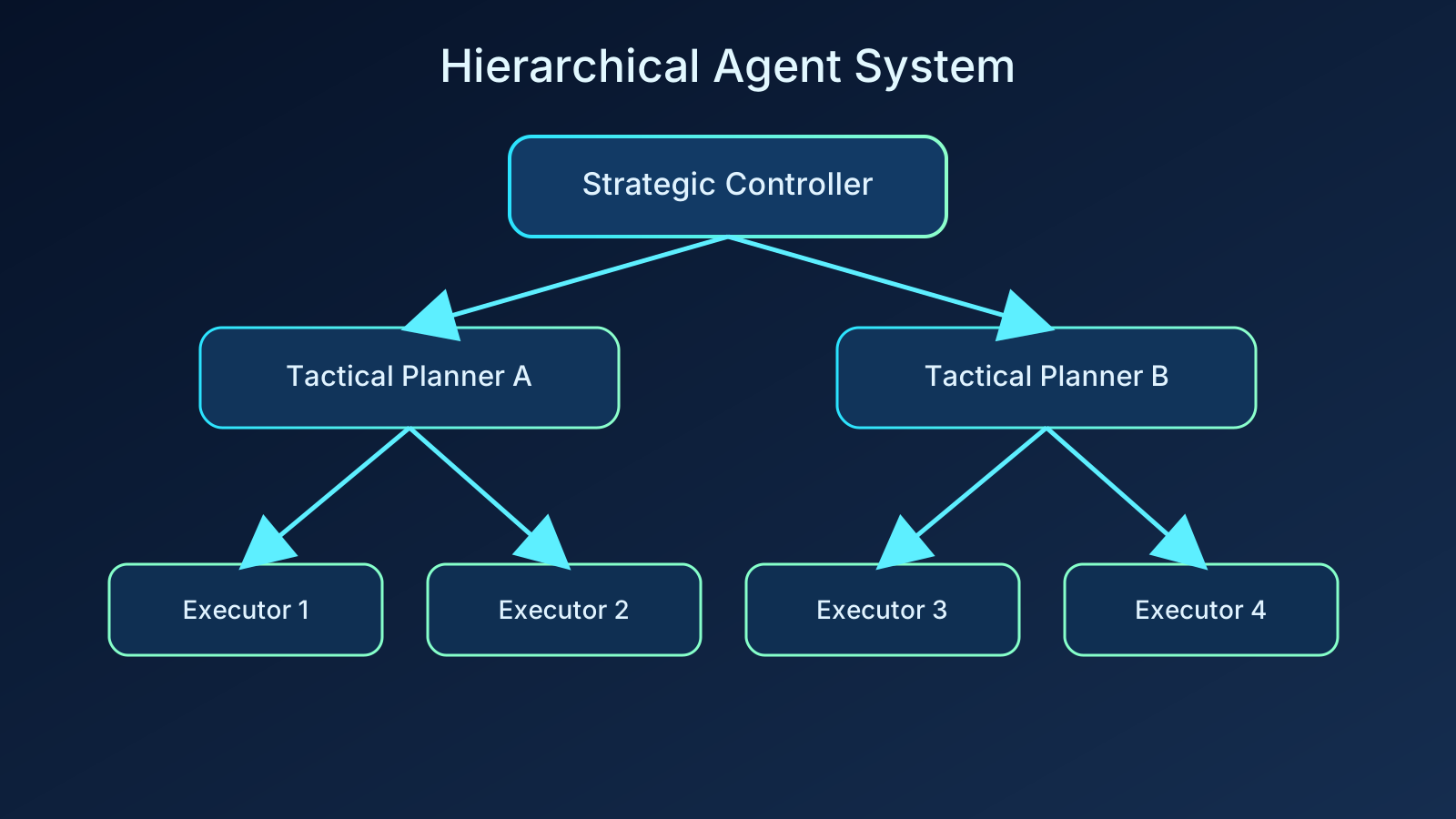
Visual: Hierarchical Agent System
Conclusion
Agentic AI represents the technical foundation for the next generation of autonomous systems � capable of planning, executing, and learning in complex environments. For engineers and researchers, mastering its architecture and ethical design principles will be critical to unlocking safe and scalable autonomy in the AI era.


Comments